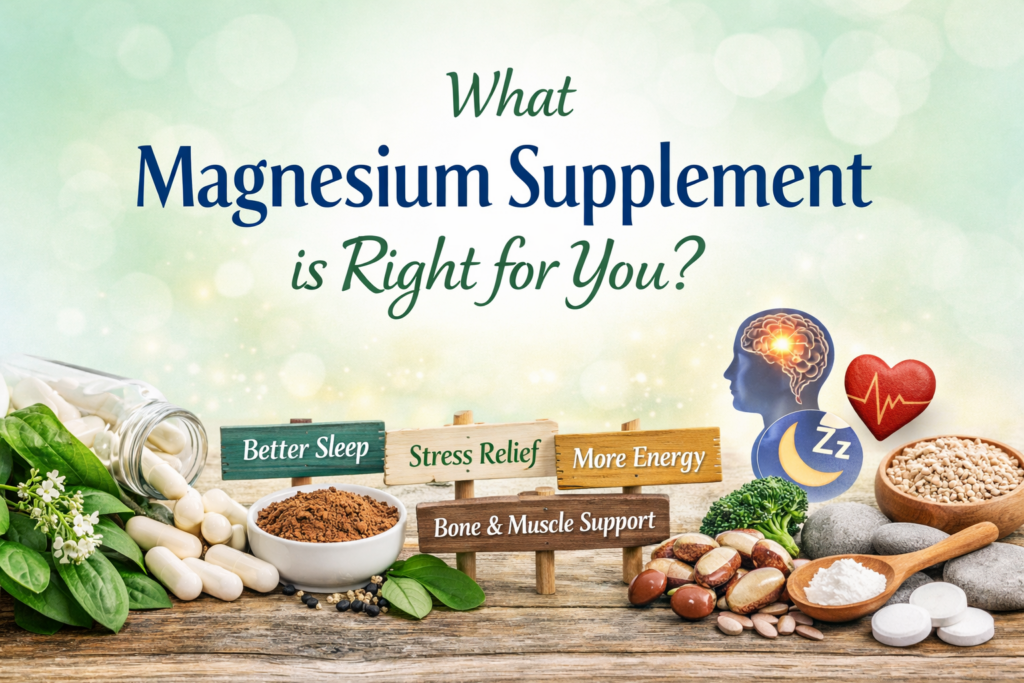
As a Nutritional Therapist, I always take a food‑first approach. Real, whole foods provide the nutrients our bodies recognise and use most effectively. But there are times when we need a little extra support, and that’s where supplements can play a helpful role.
One supplement that has grown hugely in popularity over recent years is magnesium. It’s become a go‑to for many people, and for good reason. Magnesium plays a vital role in our health, and its benefits are hard to overstate. From improving sleep and lifting mood to supporting energy, muscle function and stress resilience, it really is a super mineral.
Magnesium in Food: Your First Line of Support
Before reaching for a supplement, it’s worth remembering that magnesium is naturally found in many delicious foods, including:
Dark leafy greens
Dark chocolate
Avocado
Nuts & Seeds
Oats
These foods form a great foundation but if you’re still struggling with sleep, stress, energy or muscle tension, a supplement may offer additional support.
With so many different forms available, it can be confusing to know which one to choose. Each type has its own strengths, and the best option depends on what you want to support.
Here’s a simple breakdown of some of the different types of magnesium supplements:
Magnesium Glycinate – perfect for stress release and promotes better sleep and mood. Gentle on the stomach and ideal for evening use.
Magnesium Citrate – a great all‑rounder for energy, mental wellbeing, bone and muscle support. It can also provide short‑term constipation relief.
Magnesium Malate – supports energy production and muscle function. Often used for fatigue or muscle soreness.
Magnesium Taurate – supports mental wellbeing and may help regulate blood pressure. A good option for stress and cardiovascular support.
Magnesium L‑Threonate – known for its ability to cross the blood–brain barrier, making it helpful for memory, focus and cognitive function.
A Quick Word of Caution.
Always check with a doctor or qualified professional before starting any supplement, especially if you’re taking medication or managing a health condition. Supplements can be incredibly helpful, but they need to be used safely and appropriately.
Want to Learn More?
If you’d like to dive deeper into the wonderful world of magnesium — and many other nutrients, you’ll find a whole section dedicated to this brilliant mineral in my book, Thrive With Nutrition, available on Amazon.
Magnesium truly is one of the most supportive minerals we have, and understanding the different forms can help you choose the one that best fits your needs.